Refrigeration · Xian'an is more professional
Industrial refrigeration equipment manufacturing supplier
全国免费咨询热线
13337893508
13861193508

Refrigeration · Xian'an is more professional
13337893508
13861193508
mr:chen:13337893508
ceo:chen:13861193508
邮 箱:1106221632@qq.com
地 址:No. 9, Chunshan Road, Xingbei District, Changzhou City
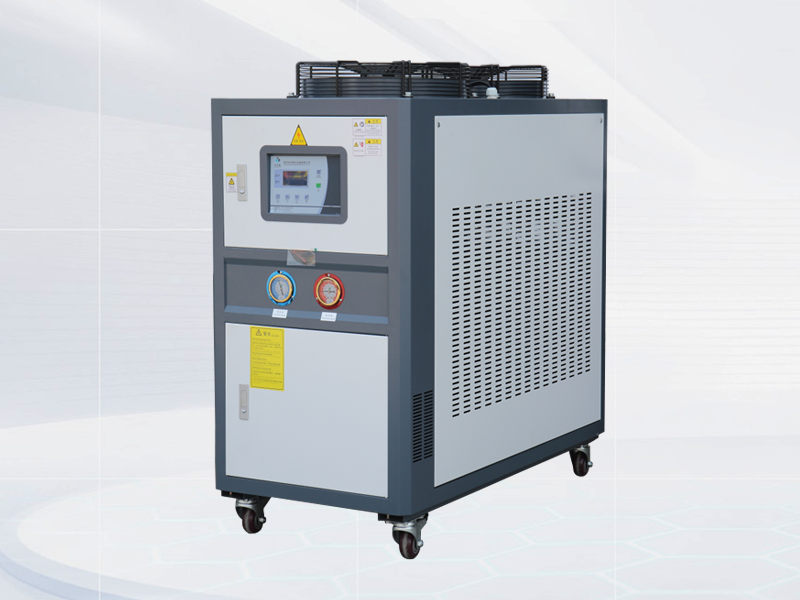
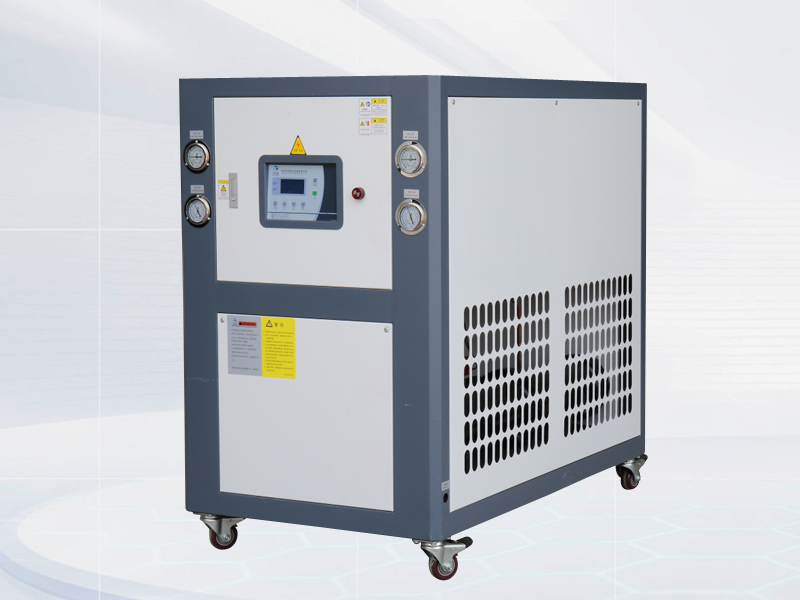
Firstly, the principle of a chiller is a multi-functional refrigeration device that removes liquid vapor through a compression or heat absorption refrigeration cycle. Depending on the different refrigeration forms of the chiller, it can be classified as air-cooled chillers or water-cooled chillers.
The simple way to identify a cooling machine by its appearance is that there is a fan installed on the top or side of the unit. This is a wind-cooled cooling machine. The one with the circular yellow water tank is a water-cooled cooler. The difference lies in the way they dissipate heat. Wind-cooled cooling units achieve heat dissipation through self-installed fans and air exchange, while water-cooled cooling units require auxiliary equipment - cooling towers and pumps - for heat dissipation. Wind-cooled cooling machines have no cooling tower, are easy to install and move, and are suitable for water-deficient situations. However, air coolers rely on fan cooling, so they have higher requirements for ventilation, humidity, and temperature in the surrounding environment. Water-cooled cooling units operate more stably, have less cooling loss, are easier to return oil, and the heat transfer tubes are less likely to crack due to freezing. They have higher efficiency than wind-cooled units. However, water coolers have a wide range of applications and are much more expensive than wind-cooled units. When choosing a cooling machine, one must consider objective environmental factors, select the appropriate model, and choose the appropriate cooling machine based on the cooling capacity (cooling capacity = chilled water flow rate * 4.187 * temperature difference * coefficient).
mr:chen:13337893508
ceo:chen:13861193508
Mail:1106221632@qq.com
Addr:No. 9, Chunshan Road, Xingbei District, Changzhou City